Mapping the Regulatory Patchwork: How State-Level Gaming Laws Create Structural Edges for Informed Players
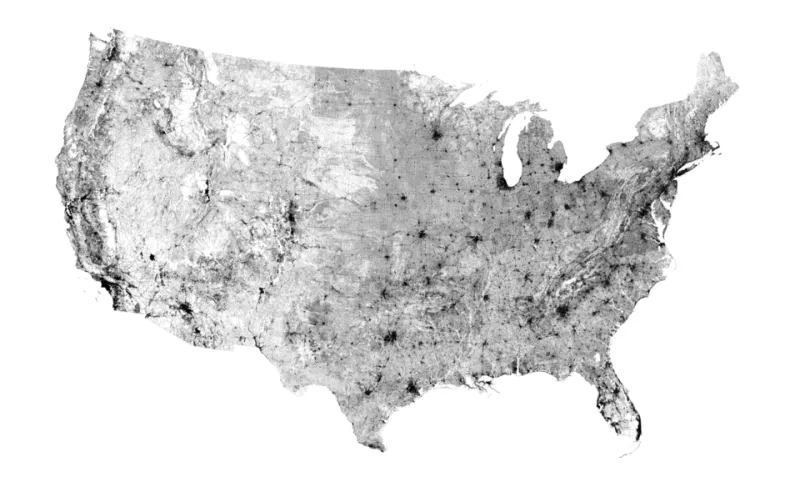
Photo: WClarke, CC BY-SA 4.0, via Wikimedia Commons
When the Supreme Court's 2018 Murphy v. NCAA ruling dismantled the federal prohibition on state-authorized sports wagering, it did not create a single American betting market. It created fifty potential markets, each governed by a separate legislature, regulated by a separate agency, and shaped by a separate set of political and commercial compromises. The result, several years into the post-PASPA era, is a regulatory landscape of remarkable heterogeneity — and for the sophisticated bettor, heterogeneity is synonymous with opportunity.
Understanding why certain states reward informed, high-volume players while others structurally disadvantage them requires looking beyond headline tax rates and licensed operator counts. The meaningful differences lie in the details: promotional restrictions, in-game betting permissions, market breadth requirements, and the competitive dynamics that emerge when a state hosts two operators versus twelve.
The Competitive Density Effect
The single most reliable predictor of favorable conditions for serious bettors is operator competition. In states where licensing frameworks have accommodated a large number of competing sportsbooks — New Jersey, Colorado, and Illinois being prominent examples — the pressure to attract and retain volume-generating customers produces measurable benefits. Odds margins compress. Promotional budgets expand. Limits for winning accounts are set more generously, because operators in competitive markets cannot afford the reputational cost of being known as a book that restricts sharp players aggressively.
Contrast that with states where legislative or commercial arrangements have produced effective duopolies or monopolies. In markets where one or two operators face limited competitive pressure, the incentive structure inverts. Margins can remain elevated, promotional spending is rationed, and account restrictions are applied with considerably less restraint. The bettor in a low-competition state is, in structural terms, playing a different game than their counterpart in a saturated market.
New Jersey warrants particular attention. As one of the earliest adopters of post-PASPA legalization and home to a dense operator ecosystem, the Garden State has consistently offered some of the most competitive lines and most aggressive promotional environments in the country. For bettors with the flexibility to establish legal residency or maintain accounts in multiple jurisdictions, New Jersey's market structure represents a baseline worth benchmarking against.
Promotional Arbitrage Across State Lines
State regulators vary considerably in how they govern promotional offers — deposit matches, odds boosts, profit boosts, and risk-free bet credits. Some states impose strict disclosure requirements and cap the structural advantage an operator can embed in promotional terms. Others apply minimal oversight, leaving promotional design almost entirely to the operator's discretion.
For the informed bettor, this variation creates what might be termed promotional arbitrage: the systematic extraction of value from offers whose expected value, when calculated precisely, is positive or near-positive even before a single wager's underlying edge is considered. A well-structured profit boost on a correlated parlay, applied in a state where the boost terms are favorable and the underlying market is liquid, can represent a meaningful addition to overall return on capital.
The mechanics of this approach require genuine analytical discipline. Promotional terms must be read in full, expected value must be calculated rather than estimated, and execution must be timely — promotional windows are often narrow. But for bettors already operating with a rigorous analytical framework, the additional layer of promotional value represents incremental yield at relatively low marginal effort.
Market Access and the Multi-State Account Structure
Legal sports betting in the United States is predicated on physical location at the time of wagering. A bettor need not be a resident of a state to place a legal wager there; they must simply be physically present within state borders. This distinction, mundane on its surface, has significant practical implications for players whose travel patterns or geographic flexibility allow them to access multiple state markets.
A bettor who regularly moves between, say, New York, New Jersey, and Colorado is not operating in a single market. They are operating in three — each with its own operator ecosystem, its own promotional calendar, and its own line-making tendencies. Maintaining funded accounts across all three jurisdictions allows for opportunistic action: when a favorable line or promotional opportunity emerges in a given state, the infrastructure is already in place to act without delay.
The administrative overhead of multi-state account management is non-trivial. Tax reporting obligations, account verification requirements, and the logistics of maintaining balances across multiple platforms all require attention. For high-stakes players, however, the incremental value available through this structure routinely justifies the operational investment.
Regulatory Environments That Reward Skill
Not all regulatory variation favors the informed bettor. Some state frameworks, whether by design or by the lobbying influence of incumbent operators, impose conditions that structurally disadvantage skilled play. High handle taxes passed on through elevated margins, restrictions on in-game wagering that limit the availability of live markets, and prohibitions on certain bet types all reduce the surface area available for edge-seeking.
States with more permissive frameworks around in-play betting and prop market availability tend to reward analytical sophistication more generously. Live wagering, in particular, creates opportunities that pre-game markets do not: the ability to observe early-game dynamics before committing capital, to hedge pre-game positions at favorable in-game prices, and to exploit the faster-moving and occasionally less-efficient live pricing environment.
Colorado and Virginia have both emerged as relatively permissive environments for market variety and in-play wagering, making them worth monitoring for players whose strategies lean heavily on live markets. Michigan's competitive operator landscape and relatively broad market permissions have similarly attracted attention from serious players in the Midwest.
Building a State-Aware Betting Strategy
The practical takeaway for elite players is straightforward in principle, if demanding in execution: treat state regulatory environments as a variable to be optimized rather than a fixed constraint to be accepted. Research the competitive landscape in each state you can legally access. Understand the promotional frameworks and their genuine expected value. Identify which operators in each market offer the most favorable conditions for the specific bet types that constitute your edge.
This is not a passive exercise. Regulatory environments evolve — new operators enter markets, promotional policies shift in response to regulatory guidance, and tax structures occasionally change in ways that alter operator behavior. Staying current requires ongoing attention.
At J88 Pro, the commitment to elite-level play extends to ensuring that serious players have access to the information and platform infrastructure needed to operate effectively across the full complexity of the American betting landscape. The regulatory patchwork is real. For those who understand it, so is the advantage.